





A few weeks before Fall Market, Stefanie Couch had a fruit fly invasion in her studio. She picked up a RESCUE!® Indoor Fly TrapStik and a RESCUE! fruit fly trap, and the problem went away. What surprised her was where the TrapStik ended up: in plain sight on top of a cabinet. Its pixelated pattern hides the little black flies it catches, so she doesn't have to tuck it away when people come in.
What she didn't know until Market is that the pattern isn't just camouflage. The RESCUE! research team scanned an insect's retina, figured out which colors and patterns flies are drawn to, and printed that pattern under the glue. It hides what it catches and pulls more flies in.
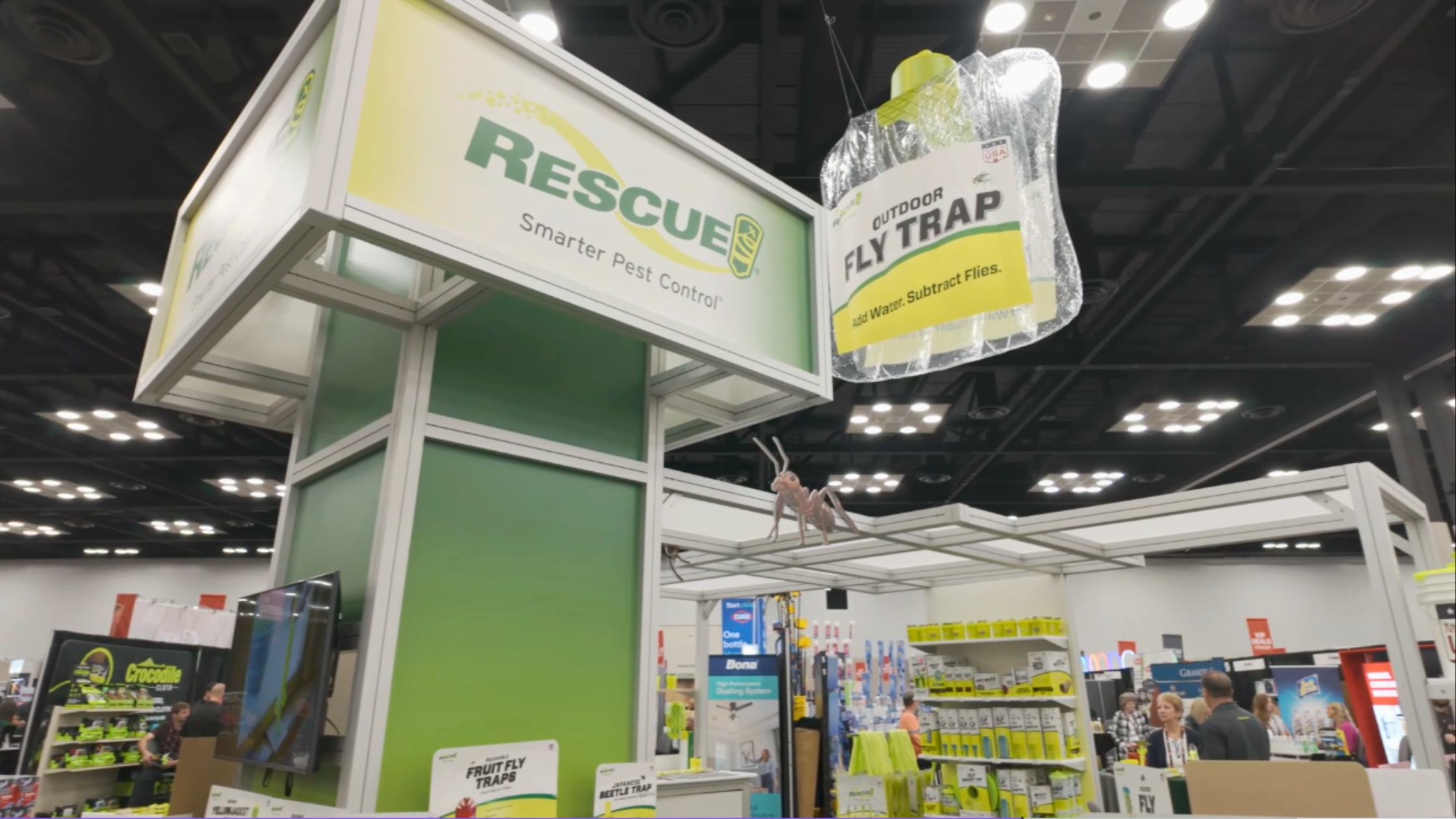
That's the kind of detail Alyssa Ando, Director of Marketing at RESCUE!, has spent 21 years translating for customers. In her words, the job is making bugs sexy. She sat down on the show floor at Fall Market in Indianapolis with our brand and strategic partner Stefanie for the Grit Blueprint Podcast, a Grit Blueprint and Do it Best collaboration.
This episode is sponsored by RESCUE!
A farm problem that turned into a company
RESCUE! started in 1982, when a Washington State University graduate wanted to control flies around farm animals without using pesticides. He invented a fly trap, and the company grew from there. Alyssa said it's still family-run, with the same owner-operator for 45 years.
Everything happens in one factory in Spokane, Washington. RESCUE! has its own engineers, product developers, and industrial designer, plus an R&D team with Ph.D. organic chemists, a Ph.D. entomologist, and a group of field scientists and biologists. Products are made and shipped from the same place, and Alyssa said that lets the team test every batch for quality before it goes out the door.
Science on the back, a simple promise on the front
Before RESCUE! goes after a new insect, Alyssa said, the team researches it hard and makes sure the product works both in the lab and in the field. Her job in those meetings is a different question: is it intuitive, is it easy to use, and is it easy for the customer to succeed with it?
Ant Baits show how that plays out. The R&D team was excited about the science, a dual lure for protein and carbohydrate, which Alyssa said many baits didn't have, plus the texture of the bait. That's useful information for members, she said. But as she put it, "The consumer just wants the ants dead." So the front of the box sticks to what shoppers care about: dead ants, no mess, and child-resistant packaging. The bait comes in four sealed stations that stay fresh until they're opened, and the active ingredients and details are still on the package for anyone who wants them.
Stefanie pointed out what that means for a store. If nobody's free to walk a customer through a product, the package does the selling.
Built from real complaints
A lot of RESCUE!'s new products start with feedback. Sometimes it comes from members at Market telling the team their customers keep asking about a bug RESCUE! hadn't tackled yet. Sometimes it comes from closer to home.
The BugStik, which RESCUE! showed at Market, started with the company president. He had flies at his window and pressed one of RESCUE!'s fly pads against the glass to catch one. When his wife found a spider, he tried it again. It caught the spider without leaving anything on the wall, and he could just throw it away. His wife, though, had no intention of putting her hand that close to a spider. So the BugStik got a handle that threads onto a broom handle or painter's pole with a 3/4-inch thread, long enough to reach the ceiling. The glue sits only in the grooves, so the surface isn't sticky to the touch, and it can even be used on carpet.
The Fly Bucket Top, launched last year, came straight from customers. People kept asking for a bigger fly trap and suggesting a 5-gallon bucket. Backyard chicken owners also wanted to feed the flies they caught to their flocks, which isn't appealing when the flies are sitting in a trap's wet attractant. The Bucket Top handles both. It fits a RESCUE! fly trap, and the only thing that ends up in the bottom of the bucket is flies, which can go straight to the chickens. Alyssa admitted her Instagram feed is now mostly chickens.
Where RESCUE! fits in a lumberyard
Stefanie grew up in her dad's lumber and hardware store, so she asked what a yard should start with if it only has room for a small section or an end cap.
Carpenter bees. Alyssa called the Carpenter Bee TrapStik a big one for lumber dealers, because carpenter bees bore into siding, fences, and decks. Contractors on a remodel, or anyone who spots bees boring into wood on a job site, have a reason to grab one. Keeping it near your decking and fencing gives them a chance to.
Ants on the job. If ants show up while a crew is working on an interior, they need to be dealt with before the project is closed up. As Stefanie said, a couple of crumbs from someone's lunch is all it takes. Ant Baits are an easy add to a pro's order.
Flies in the shop. With shop doors open all day, flies come in. Alyssa's advice is to hang a fly trap outside to handle the population before they get inside.
Buckets. "Everybody stocks a bucket," Alyssa said. Put a Fly Bucket Top next to your 5-gallon buckets, and as Stefanie pointed out, one customer becomes two sales.
"It flat works"
Asked for the one thing members should remember, Alyssa didn't hesitate. RESCUE! doesn't bring something to market unless it flat works. The company controls every step from the first idea to the shipping dock, tests every batch, and researches what customers need to see on the package so it moves off the shelf. And because it's all made in Spokane, she said, those are U.S. jobs.
If you'd like to bring RESCUE! into your store, start at rescue.com or ask your Do it Best rep about availability.